Final presentations at HTW Berlin
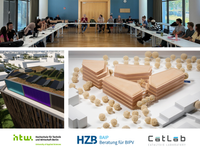
The expert jury: Prof. Dr. Rutger Schlatmann and the BAIP team evaluate the students' presentations © Samira Aden / BAIP
Building-Integrated Photovoltaics - How Does It Actually Work?
Students should explore the application of BIPV in buildings ...
- identify – and analyze surfaces, determine solar potentials, and present potentially suitable systems.
- clarify legally – and take legal requirements for a real-world structural implementation into account. What is required for approval?
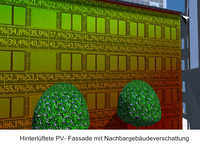
- size technically – and demonstrate and evaluate solar energy potentials through simulation, and present an optimized concept based on the underlying load profile. A special focus here is placed on shading analyses and correspondingly optimized wiring.
- size economically – and point out the necessary framework conditions for an economically viable application and evaluate the presented concept.
- anticipate the life cycle – and consider further relevant aspects within the framework of an overall ecological and operational concept.
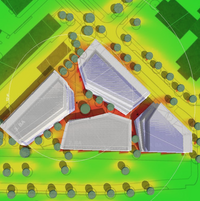
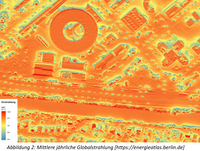
Shadow Analysis of the Research Campus, Group 4 © BAIP, HTW Berlin
Aesthetics or performance? Can I have both at the same time?
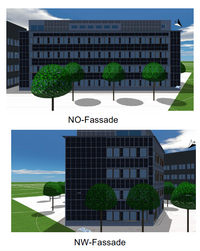
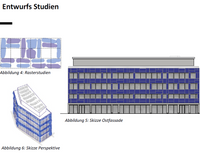
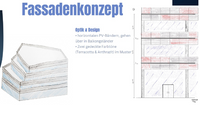
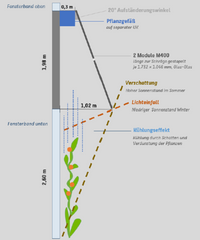
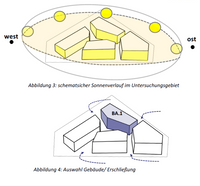
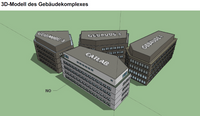
Individual groups focused on entirely different topics and priorities, so after several months of planning, design, and simulation, hardly any building resembled another. In the final presentations, where the groups presented their results for the 5 core tasks, we saw very diverse concepts: buildings wrapped in black silicon modules to achieve the highest possible energy yields, or buildings with green facades that actively "sacrificed" some usable facade areas to install a cooling green-facade system there. The goal here was less about finding the "one right concept" and much more about a creative engagement with the given conditions. A good concept needs to be well-justified - and what explains complex matters better than a few pictures? Feel free to take a look at a few impressions of the project work here: